Episode Transcript
[00:00:00] Speaker A: This episode of Something Worth Saving Asheville Stories of Resilience is brought to you by. Explore Asheville Asheville, North Carolina is the kind of place where you can spend the morning on a trail with views of the Blue Ridge Mountains and then be back in town for a mind blowing dinner that is an adventure all its own. The food, the art, the music, it's all got this creative energy that just pulls you in.
And honestly, being there feels good. It's the kind of trip where you come back lighter and more inspired.
If you're looking for a getaway that blends the outdoors with culture and flavor, you need to visit Asheville.
[00:00:35] Speaker B: Highland started with my father's unquenchable thirst.
[00:00:38] Speaker C: To build, to connect, to see possibility.
Our thirst for good feels sets us apart.
[00:00:46] Speaker B: Good times flow as freely as our beer. Grand milestones and intimate moments become unforgettable memories and first visits become lifelong traditions.
[00:00:57] Speaker C: This is Highland Brewing's thirst for good.
[00:00:59] Speaker B: Good flavor, a good future, and of course, all the good feels.
[00:01:06] Speaker D: I am resilient.
[00:01:08] Speaker B: I trust the movement.
I negate the chaos, uplift the negative.
I'll show up at the table again and again and again.
[00:01:20] Speaker E: Welcome to our final episode of Asheville Stories of Resilience. We've shared stories of place and community and now we will hear more about the strength of resilience in the face of crisis.
[00:01:32] Speaker A: As we shared in episode one, we felt called to tell these stories given that our time gathering interviews in Asheville happened so soon after Hurricane Helene. While that timing was not planned, being there at that fragile moment when things were still so fresh and enabled us to hear stories we may not have heard otherwise.
[00:01:51] Speaker E: We wanted this four part series to serve as a love letter of sorts to a city that gave us so much love. As we continue our journey of creating future podcasts about five more cities we visited and working on our book, we know that the people of Asheville will remain in our hearts as they continue the lengthy process of rebuilding.
Let's get this episode started with more from our friend and and serial entrepreneur Johanna Patrice Haggerty, who we shared a meal with at Chai Pani, which quickly became our favorite restaurant in town.
[00:02:24] Speaker C: There's always this drive to make sure that this town is that Southern, resilient, creative, renegade place, I think.
[00:02:33] Speaker E: Yeah, and you can feel it. Like you can really feel it.
So thinking ahead to the future because you know you've just come out of this six month past Helene, we've been talking to a lot of artists and people about how that's affected Both the economy, people, psychologically, people lost their works of art like their life's work.
And we know that things, you know, they call it a once in a thousand year storm. But we know that it, we know that, that we don't know. We just don't know. There's so much unknown. So given that, I mean first of all, do you see Asheville coming back?
[00:03:09] Speaker C: I love that question. I am very a proponent that I don't think there's ever a coming back. Right. I think What I saw 20 years ago was never going to come back 10 years later. Right. I think it's always an evolution of forward. That doesn't mean that some of those undertones again of renegade rebel creativity and ideas and innovation and entrepreneurialism isn't going to go away. I think that will always stay because that has always been here. But I think it will shift. Right. We were talking off, you know, the radio, like what else was going on is the food industry was popping up and then that meant the beer industry was really popping up and then that meant, oh well, now that we have food and beer, of course we need more music, of course we need more art. So they all work together. So I absolutely think this town will always have that kind of vibrant creativity. Who's making that happen I think will be the thing that will be yet to be discovered.
[00:04:02] Speaker E: It seems like both an opportunity as well as a little bit of trepidation around like what, what, what comes next? You know, a little uncertainty it seems.
[00:04:12] Speaker C: I mean, I think creativity in general, right. I mean we accidentally, a lot of us here locally would call it the pandemic.
[00:04:19] Speaker E: Right.
[00:04:19] Speaker C: We weren't even thinking when it was like Helene recovery because it had that same feel. Now the rest of the world wasn't experiencing that with us. So that was different. But if to us it was the same level of catastrophe when the rest of the world shut down. And that is terrifying, right? I mean a lot of us still are recovering from ptsd. One of my closest colleagues swam her and her one year old child her three story home. I mean there are stories that people will never get over, will always carry through themselves. Right. There's always going to be that. But again, humans are insanely resilient.
[00:04:52] Speaker E: When it seems like people here are insanely resilient. Somebody told me yesterday that like artists can pull things out of a dumpster and make them beautiful. And I think those scars that Asheville has survived are going to become a part of the next iteration of the placemaking here. It's part of the story now it's part of history.
[00:05:12] Speaker C: Creativity is, I think, born out of both good and hard moments. And sometimes the most powerful art we see comes from the hardest times that exist. Right. I live a couple hundred feet from where the water stopped in River Arts District. I'm normally almost 1,000ft from where that river stops.
[00:05:29] Speaker E: Right.
[00:05:29] Speaker C: It was terrifying to witness that. But in the weeks and months after, even as the rubble's piling up, there's this really cool, creative art piece that got sat on top with all of these, you know, wooden things or all of these metal parts together. There's signs saying, we can all do this together.
[00:05:45] Speaker A: Joanna told us that Asheville is a town where there is always a little bit of magic around the corner. And sometimes it's when you're not even looking for it that you find it. Sean o', Connell, managing partner at the outdoor music and entertainment venue Asheville Yards, shared his unique perspective on coming back from Helene and over a beer that he insisted on buying us since we were visitors in his town, because, well, it's Asheville, but people just do things like that.
[00:06:17] Speaker D: All right, so we're going to. Can we try the chocolate blueberry breakfast stout?
[00:06:22] Speaker E: All right, wait, tell us your name for a second.
[00:06:24] Speaker D: Sean o'.
[00:06:24] Speaker A: Connell.
[00:06:25] Speaker E: Sean o'. Connell. We just randomly met Sean on the street, and it so happens that he is a music promoter. We'll call him. And we just came to get a beer with him. So bottoms up.
[00:06:37] Speaker D: We're at Highwire Brewing in downtown and we're going to try this chocolate blueberry breakfast stout.
[00:06:43] Speaker A: She's not normally a stout person, so.
[00:06:44] Speaker D: We'Ll say, neither am I.
[00:06:47] Speaker B: Right.
[00:06:48] Speaker E: That is so interesting.
[00:06:52] Speaker D: All right, now I'm going to. I'm going to order my favorite beer. I'm going to get a high wire lager.
This is what I buy all the time. But that is really good, right?
[00:06:58] Speaker E: That is really good.
[00:07:00] Speaker D: So that's kind of this town. You can just find amazing breweries like this.
[00:07:04] Speaker E: We met Sean on our first night in Asheville when we still didn't have the lay of the land. We were lost and looking for a mural when he came over to us and asked if he could help.
We never did find the mural, but we struck up a conversation about our project, and he shared with us that he was in the process of taking over and expanding Asheville Yards.
So we asked if we could throw on a mic and have an unplanned interview. It didn't take long for the discussion to turn towards the aftermath of Helene.
[00:07:33] Speaker D: Sometimes I remember walking around my neighborhood a different way and seeing, you know, week out, seeing this elderly couple in their 80s, just exhausted, and they had. It was a mountain of debris in their front yard, and they had. They had been doing it themselves. And I actually knew that couple, and I didn't actually realize they lived in my neighborhood.
And, you know, just. You felt so guilty. Yet every single day, for 18 hours a day, you were tirelessly just pitching, and everybody was. And I will say that's the other thing. As we're, you know, in this kind of infinite bad news cycle, there is a silver lining that everybody stepped up, everybody helped. Friends, neighbors, strangers alike. There was. There was no. You weren't doing it.
You didn't see socioeconomic. You didn't see race. You didn't see any political. Like, you just. You just stepped up and did the right thing. And so that was really inspiring. So a lot of businesses shuttered, a lot of businesses that hoped to hang on, hope to maybe wait it out, never then eventually never reopened.
And then, of course, you have the whole rebuild, which is in and of itself pretty wild.
[00:08:40] Speaker E: How soon after were you able to start putting on concerts again?
[00:08:45] Speaker D: Well, we haven't. So we're an outdoor venue, and we're outdoor venue that went through management, changed everything else. So we're launching our first concert this season, so we didn't have to do that.
I want to think through, you know, there's a music venue called the Gray Eagle that really just wears, you know, wears the community's heart on their sleeve. And they stepped up almost immediately, immediately doing free outdoor shows. And they were kind of right, almost literally just a few hundred feet from the floodwater line.
So they were impacted because there was no business, but they really tried to, you know, do fundraisers, do anything they could that really promote the spirits of the community, which I think is an amazing role that the arts play.
[00:09:29] Speaker E: Yeah, yeah. I mean, the idea of promoting the spirit of community after a natural disaster, I mean, we think about the things that bring people together, and music certainly is one of those things.
[00:09:44] Speaker D: Two of our other outdoor venues are completely gone. Like, flood wiped them out. They were on the rivers. They were just wiped out. So we're going into a summer where those venues don't exist. And a lot of that community, one of them was called Salvage Station, and Danny and his crew program a certain style of music and genres. They really, when you think about programming, everybody, music is amazing, because what might inspire me and get me, you know, singing in the bath, you know, Shower or, you know, skipping a step may not do it for you.
And I always say there's good music, there's great music, there's bad music, but then there's that music that just connects. And that's what really keeps me motivated to do this, and I've been doing this for 30 plus years, is that when that music connects to an audience, it's so powerful. And so Salvage Station, they had built a community of people and they had such an ear on the ground to program a certain kind of thing. And that community is really hurting. That was their gathering place. That was where they could get, get with people with like minded interests. Like not only just music, right? Just just overall.
And they weren't fancy. That venue was, you know, and I don't mean, I mean this, I really mean this in a really nice way. It was called Salvage Station. It was an old dump. It felt like they tied together chicken wire and car tires and made magic. It had its own, it had its own vibe. And I think for a town that's quickly gentrifying and, and where, you know, we have amazing restaurants. But maybe to some of the folks who moved here, you know, because they were whitewater rafters and they were mountain climbers and you know, they could come here and you know, identify people that were a little closer to themselves in terms of values, you know, they're watching a lot of what's, you know, exciting and burgeoning and it's not, not bad, it's just different is not necessarily what they are into or what they can identify with. So for that kind of old school Asheville community or even what I think a lot of people think of Asheville Salvage Station was the gathering ground. So that community is really hurting and they feel disenfranchised and wonder what's left for them. We're just trying to make sure that hey, there's a. There needs to be. We need to make sure this community is getting some of what they want.
And I think that's really important. I also would say we're also seeing that that community is probably more affected, right? They're probably hospitality workers. They're relying on tips. Those are the folks that probably are hurting the most too right now.
Either jobs haven't come back or they're working in the hospitality business and they're just not seeing the traffic, not getting tips.
So it's been an interesting walk to do this and it all has meaning and purpose. And we're, I think one third of our staff worked at that venue last Year.
So we're grateful to put them back to work.
[00:12:49] Speaker A: You're helping to create a gathering space for people who, I mean, everyone needs gathering spaces, but this community really needs it. Like, can you, can you articulate what that means to you? Like how important this work is? It seems now?
[00:13:09] Speaker D: Yeah, it's important. Listen, we've had a lot of public gatherings.
We've had a public grieving, the act of getting together with strangers and picking up trash or helping your neighbors, like, to no ends. There's been a lot of that. But this is maybe a step towards what's ordinary.
This is a step towards, you know, where we want to be. And truth is, a lot of folks aren't there and they, you know, and they're, they're gonna have, you know, but they may get that fleeting moment of relief and joy and listen, that's the shared experiences of that concert, of being in that moment, hearing your favorite song or, you know, just getting caught into a melody and that just takes you away.
[00:14:00] Speaker E: And it seems like, you know, certainly before the hurricane, obviously, you know, doing these big festivals, you're bringing people together. But there does seem something about, like the resilience of the human spirit in this particular moment that feels kind of, kind of like in a way maybe exciting to be a part of or exciting for us at least to hear about, you know, because it's like people do need hope. People do need something that gives them an injection of like what's possible or that it's okay to celebrate again, that it's okay to be happy again. And I think music really does that.
[00:14:32] Speaker D: You want, you want to be part of helping this comeback. You want, you want to be part of making sure that all those voices, all those people with any interesting visions for how they're, how they want to put their creativity in the world, have a place for it.
[00:14:47] Speaker A: Oh yeah oh my darling Stand by.
[00:14:53] Speaker E: Me no matter who you are.
One of the first places that was able to reopen after the hurricane was Farewell Coffee. Farewell has a little place in our hearts because it was one of the first places we checked out and right away felt at home. It's got this sort of European cafe feel with an amazing indoor outdoor vibe. And we began talking with the owners, Max and Jordan Peterbaugh, because we discovered that Max's sister Michaela works virtually at the cafe for none other than Major League Baseball.
[00:15:28] Speaker A: So that makes her a digital colleague of mine.
Any place located a stone's throw from McCormick Field with great coffee and, and a built in MLB employee is my kind of place. And, you know, I'm already thinking about an MLB Asheville satellite office.
What is the sort of overall community? Because we can. We can literally see the ballpark from here.
Maybe you can talk about, you know, the ballpark community and then the community that's continued to build here. Just in terms of. I mean, you have family here, but I would imagine this almost feels like a bit of an extended family, just with the regulars and people from the ballpark who probably happened by.
[00:16:05] Speaker F: Yeah, we're very fortunate to have a lot of regulars. Like, as soon as I walked in this morning, I recognized by 10 of the people in there and usually know them by name and drink order too.
[00:16:18] Speaker E: We've become regulars, apparently. This is our third time here in 10 days.
[00:16:22] Speaker F: Yep, yep.
But, yeah, but then that extends out. So we're in the south side or South Slope neighborhood, which is also where all the breweries are at. So a lot of the workers for the breweries employees, before heading into work, stop in here, get their. Their coffee before shift. And then so we all know all the employees and all the brewers in town in this area too.
And then when games hit, a lot of fans and the community come to these breweries before the games. And, yeah, that's just kind of how it. This area kind of vibes.
[00:16:55] Speaker A: When the Pewterbaws first moved down here, they had to deal with COVID Then the next big obstacle, obviously, was the hurricane.
[00:17:03] Speaker F: I'm also a firefighter for this, for the city. I'm going on three years as a firefighter for the city of Asheville.
[00:17:09] Speaker B: But I will say it was so.
[00:17:11] Speaker E: Terrifying having Max be on duty like the day it happened.
[00:17:15] Speaker F: Yeah. The city eventually lost all cell service, all power, all water.
The water was the big one that really affected months later, but, yeah, lost all those services.
Plus the highways in and out of the city were wiped out. So everyone was kind of stuck here for a few days, not knowing what was going on because we had no Internet or wi Fi, so we were listening to the radio.
But us as firefighters didn't know either.
No one really knew a whole lot at that time, but there were a lot of, I think over 100 swiftwater rescues that no one really publicized, and I wish they did.
[00:18:00] Speaker E: I'm curious how the coffee shop in particular, the big thing that we've been hearing from people is that the most incredible thing that happens after an event like this is how community comes together, whether it's to rebuild or it's to make sure their neighbors have what they need. Or we know that it was just like there were certain places set up as like emergency places. What was the coffee shop like at that time?
[00:18:23] Speaker F: A lot of people stepped up. A lot of businesses stepped up giving away free food. The breweries, because they had access to clean water, because of their brewing methods, were giving away free, like potable water.
The community really came together and no matter like who you were, like, everyone came together and so, yeah, businesses stepped up.
[00:18:49] Speaker E: One of the things that's really amazing about living in a small, like, sort of very close knit community is it's got a little bit of that Cheers vibe of like a place where everybody knows your name.
It's just such an incredible thing. Like, what's it like for you as a coffee shop owner to see community coming together around your place?
[00:19:07] Speaker F: We kind of saw a glimpse of it in Covid. With COVID as well.
A lot of people just wanting, kind of just to talk. Like I felt like at the walk up window during COVID people just wanted to talk, just wanted to kind of like say hi, talk for five minutes and they'd go. Same thing with the hurricane. It was just like once we were able to reopen, a lot of like, how, how'd you do? How are you doing now? You doing okay? Still, a lot of that talk was going on and then people obviously were able to see their friends that they haven't seen in a while because a lot of people left town too, once the roads got open. So once it kind of cleared up, everyone kind of came together and started checking on each other.
[00:19:53] Speaker A: I just want to make sure you're young. Cheers was a sitcom.
[00:19:55] Speaker F: I remember Cheers.
[00:19:57] Speaker B: Yeah, we get that reference all the time though, actually.
[00:20:00] Speaker E: Like, I feel like every new visitor.
[00:20:01] Speaker B: Is like, oh my gosh. This is like Cheers. Like everyone knows each other.
[00:20:04] Speaker F: And in the shop itself is small. It's a small shop, so we have to interact. Like you're interacting with each other because there's not much seating, there's outdoor patio. But yeah, everyone's pretty much talking to each other. And especially if you're a regular, like, you know, everybody.
[00:20:21] Speaker A: At any point, were you worried about the future of the shop and. Or, you know, what Astral was going to be like?
[00:20:26] Speaker F: Luckily my personality is pretty positive, so I was kind of. And we did go through Covid, so I mean, I kind of had an idea that there'd be small business loans available, SBA loans.
But I also knew from COVID that I can't just sit back. So me and her brother, who's the Landlord, mostly him. But was it because it was able to create a water system in the back?
So we were able to open without. With bypassing the city water.
So we had.
We had well water come in, which was fed into the back room, which then powered the whole.
Supplied the whole building. So we were able to open how many months after the hurricane? A month.
[00:21:15] Speaker E: You were one of the first.
[00:21:16] Speaker F: Yeah, we were one of the first coffee shops to do that.
[00:21:19] Speaker A: When the city and the surrounding areas were completely without water for a full six weeks post Helene, it was places like Highland Brewing and Farewell Coffee that stepped up and served as gathering spaces in the aftermath of the storm.
When we talk about third spaces and the function they serve in normal times, they become exponentially more valuable in bringing people together as they are processing a traumatic event in real time, even if it's just for a beer or a good cup of coffee.
[00:21:45] Speaker E: Over the course of our two weeks in Asheville, we heard story after story about how various communities found their way through in the weeks post Helene. Whether it was helping neighbors cut down trees, finding ways around the city's water system, or making music, in most cases, it took a lot of ingenuity and a dedication to making the city as livable as possible while keeping people's spirits up. Tulip farmer Marco Rosenbrook and Swannanoa was determined to create something beautiful out of it all.
[00:22:30] Speaker D: When I'm on the mountain and looking down below, I'll see a valley of.
[00:22:35] Speaker B: Flowers that needed time to grow.
[00:22:38] Speaker D: And I'll thank you for the rain.
[00:22:42] Speaker B: The hurt and days of pain.
[00:22:47] Speaker D: And I'll.
[00:22:49] Speaker G: I have a. I have a small chill farm here in the mountains where we use, for over a few years, reduced shoot. One of my suppliers, I reached out after the storm to him because I showed him some pictures what happened with the river and all the flooding, and in Swannon, every. All the devastation. And he said, I want to donate. Yes. And then he donated. But he donated way more than I expected.
[00:23:17] Speaker E: And how much was it? It was like 10,000 bulbs, Bubs.
[00:23:21] Speaker G: Yeah, yeah, bulbs, daffodils, punies, aliums, grape hyacinth, and of course, a lot of tulips, too.
[00:23:32] Speaker E: Wow.
[00:23:32] Speaker G: Beautiful quality. This is how the universe works, in my opinion. I also have a kind of firewood donation station at my home where people can pick a firewood when they needed it. And that was needed after the store. And I met one of the guys of Warren Wilson, this big college here, and he said, I'm in the garden department.
I can help you out if you Want. And I loved it. And Halsey is his name. Halsey Draw the outlines of this park. What was really bare, you have to understand with the storm, this was flat and were no pathways. There was no anything. And all this, the good soil was in the ditches.
So we first started with laying out the pathways. And then we reached out to volunteers in our neighborhood. Can anybody help with planting the tubes? There are a few people showed up, so we started planting. But we figured out that we did the first, the most important thing. We need to work on the soil. So we emptied the ditches, we started planting, and then we had to wait because you never know what comes up. Things need to be disturbed. For what reason God or the universe wants us to disturb it is to reconnect with each other. And even if we have different opinions, we all have the same heart, right? I don't care what my opinion of my neighbor is in what way. But we come from a fair area that everybody's trying to judge each other. And I really hope that it's not about the outside, but when shit hits the fan that we're all standing shoulder to shoulder. And that's, that's really what I. What I see that might happen. I still have a feeling that we have to go to some, literally some stores in the United States where, where the shoulder to shoulder will be.
[00:25:20] Speaker A: I want to, I want to go back to the tulips.
Well, no, just because I. And I think it's actually this is a good jumping off point because you said tulips stand for new beginning. I'm curious, like from your vantage point. And then for other people, were people, like coming and checking regularly. What was like when you saw the first, the first one coming up from the ground? Was there excitement? Was the community noticing? Or was it. Or was it, you know, a little later when they. They started?
[00:25:46] Speaker G: No, no, everybody noticed. And, and because we have this patch here in the beginning and now it's. It's called. But when everybody, when I was working there and everybody stopped, oh, we love the tulips. You would like it. And then. And I've seen in the evenings people walking by, walking through also from outside of town, because there were some news. But a lot of people just walking their dogs, walking the park and enjoying the flowers. And it's just a start because I think next year it will even be more beautiful. You have to start something.
[00:26:21] Speaker A: Were you at all surprised at the attention this got because you did this for here, right? And then you're talking about the connectedness here. That travel and leisure, you know, like. I mean all these people us, you.
[00:26:33] Speaker G: Know, like that's what I figured out. People right now also want good news. Thought of humanity and the passion of humanity.
Or is me or somebody else go direct their way. No matter how or what is what I have experienced in my life where my heart goes my lysos.
And that's not only in a smaller personal person, that's also in a bigger person of.
Of a community. We have started up a garden club that's coming out of this park. I think is the good thing about being unincorporated that we have to take care of ourselves.
We should not wait always for the government to do what is necessary. And when you talk about flowers.
I was joking, but I'm not completely joking. When or astars. What would be more beautiful then we have not only on this side of the river, but also on the other side of the river, great pathways of flowers and spring flowers, daffodils, tulips. That people are coming to Suwanna now because of flowers.
[00:27:39] Speaker E: That would be incredible. So what a vision for the future. It's just that it's covered with new hope of flowers. Things blooming, things bringing people joy and hope. There are many things blooming and flowering, rising up now that the floodwaters have receded. After the storm, many artists displaced from the River Arts District took up residence in abandoned industrial buildings and even in old shopping malls. In the repurposing of one large vacant building, we saw the beginning of a new story taking shape.
[00:28:11] Speaker B: You can spend your whole life building something from nothing.
[00:28:18] Speaker A: One storm can come and blow it all away.
[00:28:24] Speaker B: Build it anyway.
[00:28:31] Speaker H: So my name is Blake Butler and we are at Resurrection Studios Collective. This is the former Moog building and it's right here in downtown Asheville, North Carolina. Right on the edge of downtown Nashville, North Carolina.
And it's an iconic building because they created all the Moog synthesizers that were shipped out across the world for 25 plus years. The factory was located near the river before that.
But when the flood occurred, you know, and everybody was out of sorts. And where are artists in the River Arts District and all over the place. I got a call from the CEO's wife, Heidi Adams, and she said, Blake, you used to help Moog with marketing and public relations.
Would you be willing to help us figure out where the displaced artists are in western North Carolina and see if they'd be willing to meet in the vacant Moog building?
So sure enough, we went on this discovery mission and people were in all sorts of different phases based on whether they lost their studio or they lost their studio and their art. Some of them were able to get their art out in time and maybe load it in their car.
So my point being is the first meeting, we sat in a big circle in this room right over here that I'm pointing at, and they just told us where they were. A lot of them didn't have the resources at this time to rent anything, so they might have exhibition only space here.
So we started to feel, you know, that by listening to the artists, we could truly build a collective. And that's why it's Resurrection Studios collective to resurrect the spirit of the arts, you know, and we're all coming together and getting closer together now, but forming a collective and listening to the artists from these different places of what they need to be successful and go forward. The River Arts District, which we called rad, which got hit the hardest by the storm, the flood.
It was the magic, the organic magic, one of the beacons of the arts of this area.
So recreating that is going to be very tough.
But what we are doing now is creating a network where arts lift up arts. And a perfect example of that is we're all involved in this project building a new downtown arts district which we call the dad.
And it will really be an app and a map for folks as they walk around to know where the galleries are. But the artists themselves have the best network amongst the themselves. And by, you know, not only listening to the ones that are here, but listening to the ones of how we can work better together. And collaborate is important too, because I think once you go through something like a thousand year flood, a thousand year storm, nobody has the best answer. But together we can figure out the right answer of how you bring an area back online, the rebirth of an area, and you can do it better. If you have the opportunity to work back from the ground up, you can actually do it better. Things you might have thought, man, I wish we could have done that differently. You can do it.
[00:31:43] Speaker A: So along those lines, in terms of doing it right, I would imagine, you know, one of the ongoing conversations is rebuilding versus relocating. In terms of a lot of these art spaces, obviously this is a relocation.
Like, where is that? That I'm sure constant debate, where does that stand right now and where, where do you think it's headed?
[00:32:05] Speaker H: Well, in this space in particular, I think listening to the artist and figure out a sliding scale of how they can be part of this collective. Some are in this larger communal space, as I'LL call it where we are right now. Some painters, some ceramics, some potters that all want to be together and some have their individual studios. But again, I think it's listening is the key in addressing what. Where the needs are and then building from there. I think that's important. And that might not be something a lot of us were doing before the storm and we might thought, well, we know best, but now I think listening is key.
[00:32:42] Speaker A: Blake really put his finger on how to be intentional in the rebuilding of the arts community in Asheville. I was especially taken by the stories we heard from one artist after another talking about using their art making as a way to process the enormity of what happened.
Julie Bell has been at the helm of Trackside Studios, helping guide artists through it all.
[00:33:03] Speaker D: We are strong.
[00:33:05] Speaker I: Shoulder to shoulder, keep moving on resilience.
[00:33:12] Speaker D: Make a new plan.
Stand up again and say, yes, we can resist.
We are strong shoulders.
[00:33:29] Speaker B: That's what artists do. Artists create.
With the flood, it was.
It was just this outpouring of, how can we help you?
So all over the place, artists with established studios were rearranging their studios and. And finding, where do I have a wall, where do I have a shelf? Where do I have a place that I can have some art from fellow artists?
And so there was that. We had a soft opening in November with tents and just lots and lots of artists participating spread up and down the street. So we weren't open yet because we were still. We were flooded and we were still cleaning out and starting our rebuild. And so we were there just sharing stories and collecting donations and doing all of that.
But the estimate, about 10,000 community members came, and we know they were community members because it was hard to get into Asheville. You had to be really committed to come to Asheville.
[00:34:39] Speaker A: So I'm wondering, like, how obviously people do the art they do and they stick to that. And then I would imagine that there's probably a lot of the arts community. And in general, the thing that I admire about artists is they can take one of the most painful experiences and turn it into something beautiful. Have you seen, like, a lot of people in the arts community sort of use that to motivate their work? And how do you think that's sort of helped in the collective healing?
[00:35:04] Speaker B: Oh, I think that there has been. That's great question. There's been a lot of that. A lot of artists who have shifted what they're doing, or they've created pieces specifically from salvaged pieces, or they've created art specifically about the Flood. That's what this exhibit is here in our stairwell, is all art that was created post flood to express feelings. I think using art to express feelings is just so important.
And so there's been a huge amount of that. And some of it kind of focuses on the mud and the debris and all of that, and that's important for that person in their healing journey.
And some focuses a lot on heart and community and joy, and that's where that person wants their energy to go toward healing.
And some people have had to do both, where they've had to create some process pieces about the flood, about the damage, about everything that happened before they could even begin to use color or joy or flowers or anything in their art.
[00:36:25] Speaker E: You know, as you said, it's so deeply personal.
We have this. I'm trained in drama therapy, and we have this concept called aesthetic distance, which is about sort of like when you play a character, you do something that's outside of you. You're taking all of that that's inside that you maybe can't express and putting it out through a character or with a puppet or something like that.
It seems like the same kind of thing. And you take a canvas or you take found materials and you make something out of it. There's something about that process of taking the pain or the frustration or the hopelessness, I guess, and making something that's out here in the world that people can witness, that other people can have their own experience seeing it.
[00:37:12] Speaker B: Exactly. Exactly. Yeah. So that's just a huge part of why art is important to community in the very broadest sense of the whole being of the world.
[00:37:28] Speaker E: I feel like we've gained so much just from talking to people here. It's just like this incredible human shared experience that obviously, even though we didn't live through it, just in the people's telling, you just feel emotionally right away drawn in.
[00:37:45] Speaker B: Asheville just remains a tremendously vibrant area.
There's so much to see and do, and it's open.
[00:37:55] Speaker E: You know, Asheville is open.
[00:37:56] Speaker B: Asheville is way open.
[00:37:58] Speaker E: Jennifer Pickering of Leaf Global Arts picks up where we left off with Julie diving into some of her own healing journey.
[00:38:26] Speaker B: I've been walking for days and days.
[00:38:28] Speaker E: Listening to you you keep a hum.
[00:38:30] Speaker D: In the same old tune.
[00:38:34] Speaker I: All of.
[00:38:35] Speaker D: The things that you've been through match the scars on your face.
[00:38:41] Speaker B: Well in the storm has even revealed and made deeper connections. So after Helene and especially here in the Swannanoa Valley. Well, and I think it happened in pockets because we were also isolated for a good Bit of time. And one of the things that happens here as well is too, is the mountains and limited resources. And sometimes it's even the mental state of feeling limited resources as much as the reality of it. But those two things tend to separate people.
And the storm has done a lot that has bridged us in new ways, which has been pretty phenomenal.
And it will be interesting to see the most overused word right now. Interesting.
See how many times that ends up in your book.
Yeah. And it's. It's really. So we all can avoid going, what the hell.
[00:39:42] Speaker E: Yeah. I'm really six months out. You know, it's not. It's not a long time.
Right. And we don't know what's coming after this. You know, that's one of the themes that's been a recurring theme with people, is what. What does the future look like? This is an opportunity, but we don't exactly know what that means yet. Right.
[00:40:01] Speaker B: And it's been fascinating in our Leaf International work, in the 10 countries that we work in, almost everyone has experienced an extreme national.
National, national being governmental, political disaster or natural disaster.
And from the volcanoes in St. Vincent and the Grenadines to Haiti to Rwanda, genocide. I mean, really extreme pieces.
And to see their resilience is extraordinary.
And I had never been on this side of a disaster.
It's one thing to go work in a refugee camp on the edge of the Congo and set up refugee camps in partnership with Jane Goodall's roots and shoots. As someone coming in, it's another thing to be on this side of a disaster.
I have to say I prefer the other side.
[00:41:00] Speaker E: It's often easier helping other people than needing help.
[00:41:04] Speaker B: Absolutely. And it's when we come to our best. And that's why I said, you know, we've all been both saving and being saved every day. Every day in. In different ways. So I think that what I would hope is two things is one, that there is a considerable effort of keeping cultural arts vibrant, and that spanning from traditional ones to new ones and so bridging different generations and giving people their new space to create in different ways.
And that will also really help give fodder in a good way to how the community develops.
And then another is the community care aspect, which most of us experience in believably immense and unimaginable ways.
So positive since the storm. And so if the community care and kindness can continue to be a prevailing value and way that we take care of each other, which hasn't always been the path of history, and you look to the communities from every level then, then I think if that can be pervasive, especially in the development pieces, then you develop in a different way. And looking at communities across the world that have created place and space of really how people flow in their best ways, like those are the examples that we should be looking at.
And I'm amazed at how many different pieces have to come together for that to happen.
[00:43:01] Speaker A: Asheville is clearly a place where strong bonds can be forged with people. And in a hurry, we learned that with so many people we met, especially musician David Cody, who powerfully recounted how the kindness of strangers led to lasting relationships for him.
[00:43:15] Speaker I: Post hurricane, these people from Ohio had come down and set up a big tent and they're cooking food and they're feeding people.
Anybody that comes, you want food, we're going to serve you food. You want food to go and take to your neighbors or take to. They wouldn't asking any questions, whatever you want.
And so I guess it was about the middle of the day and I was getting a little hungry and I pulled in there and I asked a man named Jeff Ross for a barbecue sandwich.
And something as trivial as asking a man for a barbecue sandwich changed my life forever.
I have a lifelong friend, a good, good friend that I will spend the rest of my days appreciating his friendship. And he will me, same with his wife, same with his kids, same with his grandkids. I just felt he was a friend and I. And I loved him right away. He's got a brother named Mark Wardell. And he asked his brother in law, he said, did you run into anybody in swamp that lost band equipment, that lost their guitars and stuff? And he said, I talked to a guy named David Cody I met and we've become friends, instant friends. And he was telling me about two brothers in Swannanoa, Bobby and Jimmy Jaramello, that lost everything. They lost a complete, functional, working recording studio, 70 years worth of music gear, their grandfather's guitars, their father's guitars, theirs. These things cannot be replaced. We're talking about guitars that from the 40s and 50s that are worth hundreds of thousands of dollars. And they lost it all. It's all gone down the river.
And he said, well, I'd like to help. And so he calls me up, he said, I am Jeff Ross, brother in law.
I said, hey, it's good to hear from you.
We were talking and he said, I've decided that I'm going to clean out my music gear. He said, I'm going to keep two I'm going to keep an electric guitar and an acoustic guitar and I'm going to send the rest of it to Swannanoa. You give it to whoever, you know, needs something. He says, David, he said all we can do. He said, I can't replace a 19, you know, a 1948 Martin. But he said, we can be like a temporary bridge that will get us from point A to point, get them from point A to point B until they can replace what they've lost.
It started a relationship between just me stopping and asking his brother in law for that barbecue sandwich. Now Mark and I have started a foundation, temporary bridge. And it's our goal. We just took a bunch of stuff to Kentucky, West Virginia, Virginia.
It's our goal to seek out and find musicians that live that lost their stuff and give them something to replace it, keep the music going. And so we went in and it took off. It took off. People started donating stuff from all over. He put a little thing up on Facebook, temporary bridge. And next thing you know, people come down from Virginia bringing bluegrass instruments and bringing this and bringing that. And it's gotten to where I've just, I've given out three guitars this week.
And so there's always someone with that need, you know, And I told Mark, I said, mark, I said, there's no better feeling in the world than to walk over to someone that lost their guitar and they can't play music anymore and hand them a guitar and say, that's yours. I know it's not going to replace what, what you lost, but it's a good playable instrument and it'll get you back on track. I think music is the strongest language there is. I really do.
I think that there's nothing in the world that could join people and unite people in a good way. More than music.
[00:47:16] Speaker A: If music unites people more than anything else, taking in a ball game has to be a very close second.
We would be remiss if we didn't check in one last time with the Asheville tourists.
Few people have more of a bird's eye view of a city's recovery efforts than the mayor.
Esther Manheimer has been in that chair since 2009 and knows just how vital the team and McCormick Field are to the heartbeat of Asheville. This city has been through so much. Can you begin to encapsulate how important having the tourists here, you know, for continuity, for gathering place, has been for, for the people of this city?
[00:47:56] Speaker C: Well, I'm, you know, we, we're looking at the ballpark Right now we got.
[00:47:59] Speaker B: A sold out night. I think that tells you how much.
[00:48:02] Speaker C: People need the joy of going to.
[00:48:05] Speaker B: A tourist game in the summer. It feels so normal, feels like a normal activity. And when you're in the middle of.
[00:48:11] Speaker E: Recovering from a hurricane, that's really important to people.
[00:48:14] Speaker B: And the other thing that I think.
[00:48:15] Speaker C: So incredible about what the tourists do for our community is, you know, half.
[00:48:18] Speaker B: The visitors to the tourist game are.
[00:48:20] Speaker E: For from our surrounding area and this.
[00:48:23] Speaker B: Hurricane affected the counties all around us.
[00:48:25] Speaker E: So this is a great opportunity for.
[00:48:27] Speaker B: Them to come to Asheville and have a night out, have a dolly dog and watch a game.
[00:48:32] Speaker E: And that's just an incredible experience.
[00:48:34] Speaker A: It's a little bit of a return to normalcy. I know Brian DeWine was telling me that people kept telling him right after the storm, like, I can't wait for April. I can't wait for real. Not that this is the solution to all of the world's ills, but to have that, that thing where it's like, this is what's normal in the spring in Asheville, right?
[00:48:53] Speaker B: I mean, it makes it feel like.
[00:48:54] Speaker E: We'Re really getting back to normal, which we are.
[00:48:56] Speaker C: I mean, obviously we're open for business. People can come visit and have a.
[00:48:59] Speaker E: Terrific time on a beautiful night here in the ballpark.
[00:49:03] Speaker B: So I think it's just, you know, one of the things people don't think about in the midst of a major.
[00:49:09] Speaker C: Natural disaster is the toll on your psyche, on your mental health.
[00:49:13] Speaker B: And so it's moments like this, experiences.
[00:49:15] Speaker C: Like this that just help you kind of get back to normal.
[00:49:18] Speaker A: There are many forces that come together in the aftermath of a tragic event.
And while there may need to be a new normal, what that looks like is still a chapter being written by the people of Asheville.
[00:49:28] Speaker E: Throughout this podcast, we've talked about the importance of place and community and how our connections to both inform how we walk through the world.
[00:49:37] Speaker A: Asheville has shown incredible resilience, but it's hard to say what happens next. As things have reopened and the town and surrounding areas continue to work to get their homes and businesses back on their feet, there are still many lingering questions.
[00:49:51] Speaker E: In the past several months since we began our Asheville journey, our national divisions have only widened. Fema, so present for the six weeks post hurricane, has abandoned the recovery and the world has moved on to the next big, big disaster.
[00:50:06] Speaker A: How do we keep the focus on people's lives? We have chosen to share many of their stories because these voices matter. And perhaps Asheville can be a city that Leads by example.
[00:50:16] Speaker E: And it is in that telling that we hope to open new doors of compassion and understanding.
We may not be able to fix our country's problems, but we can shine a light on why there is, in fact, something worth saving. We're a very small town, less than 100,000 people, and there's no way that we could support all of our. Our amazing restaurants and galleries just by ourselves. I mean, they really rely on visitors to keep going.
So, you know, what we've been telling people is that everything that they love about Asheville is still here.
And even more than that, the thing that has always made Asheville great is the welcoming community spirit.
And that's.
That was strengthened, if anything, by the storm.
[00:51:06] Speaker D: It has a very big profile, but it's a very small town, and it's dealing with very big city issues.
And so I don't think the path forward on every level, economic development, on tourism, on affordable housing, on what, you know, what the political leaders have to do. I. I don't think anything gets easy. So I. I think we're going to follow the path of a lot of places that it's going to be a few years that are going to be full of ups and downs and maybe some false hopes in there, and we'll. We'll make mistakes. It's. It's, you know, it's, hey, very similar to the baseball. It's opening day, right? So we, you know, everybody won't be, you know, as good as they're going to be the rest of the season. And I think. I think it is going to be emotional.
[00:51:54] Speaker B: And suddenly, if you haven't met your.
[00:51:56] Speaker E: Neighbors yet, you have now, and you're.
[00:51:59] Speaker B: So, so grateful, and you see the importance and the connection of that shared experience that you really have to lean on each other.
[00:52:08] Speaker E: My neighborhood all got together and made a meal because somebody still had a generator and their oven could still work.
[00:52:16] Speaker B: You know, so with beer choir, it was just, oh, my gosh, we've built this neighbor, you know, community of neighbors almost.
And, you know, we were fortunate to never have to really lean on each other like that. But it was so amazing to suddenly have 50 people that would check in on you. I'm checking in, you know, and each other.
[00:52:39] Speaker G: I seem to always reflect on that on the national anthem of opening day because it's probably the only two minutes I've had of silence for the past month where I've had time to really stand. And then you stop and you think about it. You have a full house, and everyone's there Ballpark is here for our community to come together.
[00:52:58] Speaker F: Good times, bad times.
[00:52:59] Speaker G: Had a bad day.
[00:53:00] Speaker F: You come to ballpark, you forget it all.
[00:53:02] Speaker G: And obviously with this offseason for our.
[00:53:05] Speaker F: Community, I heard all season, all off season long, I can't wait till April.
[00:53:09] Speaker G: I can't wait till the tourists come.
[00:53:10] Speaker F: And I can just relax for a few hours.
[00:53:12] Speaker I: Just.
[00:53:13] Speaker F: It's so awesome to be back.
[00:53:14] Speaker G: The inspiration that here is priceless and it's profound and you don't find it everywhere. And also I realize that this place attracts a certain kind of human being here as well. And because of that one thing that doesn't work here, which works in other places like big cities, you can't be pretentious. I'm not sure if you notice this about the people. You meet a ton of authentic people. If you're pretentious around here, it's not going to work for you. You know, it's going to work against you. You really have to. Asheville asks you to be the person that you're supposed to be.
[00:53:48] Speaker E: We're watching our last sunset here in Asheville.
It's hard to fully bottle up this experience, but we wish we could.
We've met incredible people here.
[00:54:04] Speaker A: So many people. 30 people that we interviewed. Then there are the people we didn't actually interview that we still got a sense of the flavor and our favorite word. The vibe.
[00:54:15] Speaker E: The vibe. There's such a vibe here.
Yeah.
What was your favorite part of these past two weeks?
If you had to just pick one, what was one of your favorite parts of these past two weeks?
[00:54:33] Speaker A: It's overwhelming, I'll say, just in a general sense how we as strangers were just welcomed in with open arms.
[00:54:49] Speaker E: Yeah. There wasn't a single person we wanted to talk to that said no. And almost everyone hugged us.
[00:54:55] Speaker A: But even shy of the actual physical emotions I felt that we were.
We've been wrapped up by the arms of the city in so many ways.
From the owner of the Asheville tourists to the beer choir director to Lazum bus tour to 95 year old culture keeper Matthew.
I mean everybody.
[00:55:25] Speaker E: And Jennifer, like the major connection point for so many things from leaf Global Arts. I mean, what we've found here is just every single person has connected us to something, whether it's another person or whether it's a curiosity that we might have about a book we should read or more art we should look at. I feel like we came here to tell these stories, but I feel like we're walking away with such a gift.
[00:55:53] Speaker A: Is that that welcoming in, like, there's no way to describe it. There's. You always say, like, when we see something beautiful, like, I wish I could paint. Like, that's not something you would paint anyway.
[00:56:04] Speaker I: It's.
[00:56:04] Speaker A: I think it's just a.
It's something that we're going to take with us and hopefully something that we've been able to impart to the people who listen to this and read our book.
[00:56:14] Speaker E: Yeah. And I'll just say one of the thoughts I had when we really thought about doing this and the idea kind of changed and it's still changing and evolving, which I love that we just did this major pivot. We just looked at each other and we're like, nope, we're not leaving Asheville. I gotta say, I don't know if I've ever had an experience like this where literally nothing has disappointed.
And I'm so glad I got to get do it with you.
[00:56:43] Speaker A: Right back at you.
[00:56:46] Speaker E: We'll give you a little more birds and then we're going to sign off for mashville.
[00:57:00] Speaker A: Thank you for listening to something worth saving Asheville. Stories of Resilience. To follow our journey, please check out our social media. We're on Facebook and Instagram @eatplayglove, where we will be sharing updates on future podcasts and our book project, Something Worth Finding America's Soul. In small cities and towns.
[00:57:21] Speaker I: Be there to lend a helping hand no one's in this all alone we are Carolina strong.
Gonna take a long, long time this mountain will be hard to climb.
[00:57:59] Speaker A: It'S.
[00:57:59] Speaker I: Not a great big mystery We've always known that love's the key it's the people, it's the place it's the Appalachian way I am proud to say we're Carolina strong.
[00:58:26] Speaker G: Go on, man.
[00:58:37] Speaker I: Oh, pick your banjo. J.
Years from now, should someone ask how we took on such tasks in our Blue Ridge Mountain home, just say, we're Carolina Strong.
[00:59:15] Speaker E: Something worth Stories of Resilience was written by Sarah Stock Mayo and produced by Sarah Stock Mayo and Jonathan Mayo. It was executive produced by Roz Guevara. Editing and engineering were handled by Cindy Guevara and Nina Jackson of RCG Digital Media.
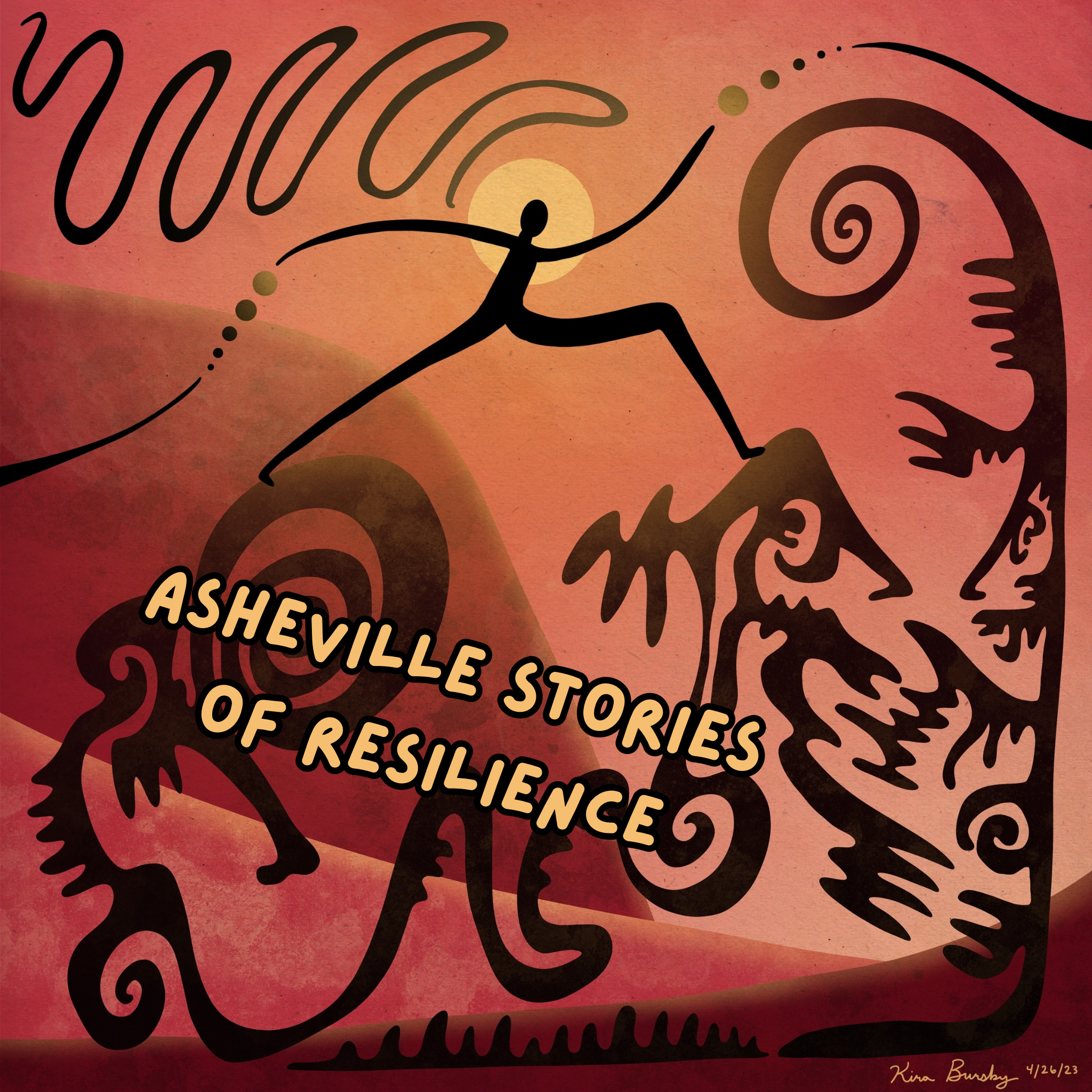
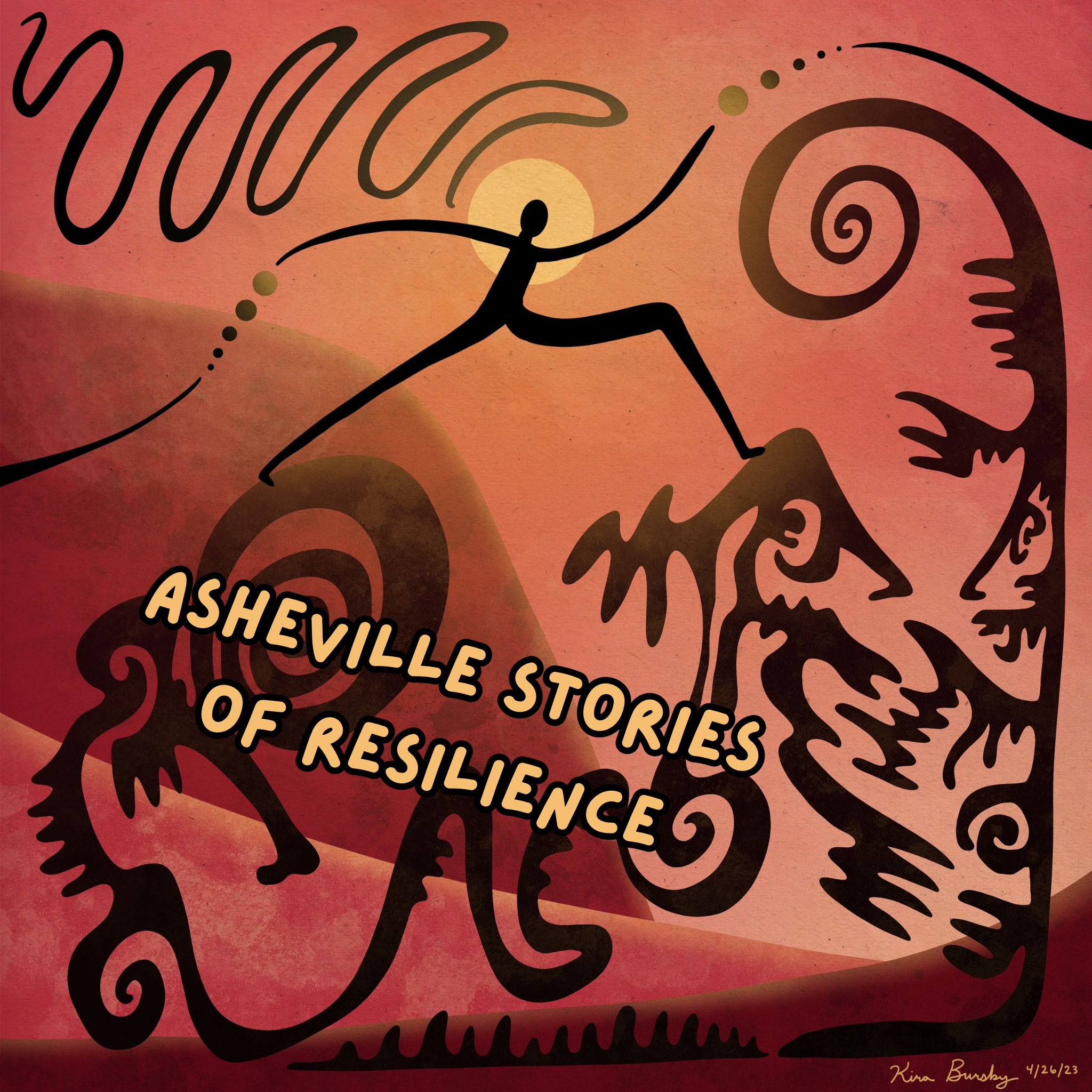
We would like to thank Mayor Esther Manheimer, Joanna Patrice Haggerty, Sean o' Connell and Asheville Yards Max Jordan and Michaela Peterbaugh and Farewell Coffee Mickey Pondl and Explore Asheville Marco Rosenbrook River Gagarian, Laura Williams and the Asheville Beer Choir Brian Dewine and the Asheville Tourists Blake Butler and Resurrection Studio Collective Jennifer Pickering and Leaf Global Arts, Julie Bell and Trackside Studio. Kira Bursky for our cover art and David Cody for his interview and his music.
[01:00:12] Speaker I: I'm proud to call this place my home.
[01:00:16] Speaker G: Forever.
[01:00:17] Speaker I: Carolina Strong we are Carolina Strong Carolina Strong Always have been we are Carolina Strong Always ways will be car that's right Strong we are Carolina Strong we are Carolina Strong.